Marketing moves forward when we share what we’ve actually tested.

Working in marketing means launching campaigns, testing acquisition channels, refining messages, changing journeys, building automations, analysing data and trying to understand why an idea worked… or didn’t.

Eat The Iceberg is the collaborative platform for marketing experiments.

The more we test, the more we learn.

The problem is that a good share of those learnings ends up in a dashboard, an old Notion page, a client folder, a Slack conversation, an email thread or, very often, in our heads.

Marketing was built on a culture of testing and sharing.

Early growth marketing rested on a fairly simple idea: we don’t assume, we test.

We launched a new acquisition mechanism to see whether it actually generated leads.

We put two messages head to head to see which converted better.

We changed one step in the journey, then looked at what the data had to say.

And, most importantly, we talked about it with other people in the marketing community: colleagues, people on a forum or someone facing the same problems over coffee.

Since then, marketing has become far more professional — and increasingly split into specialised disciplines.

That’s a good thing.

BUT!

The more specialised our jobs become, the more obvious another reality gets: no one can seriously master everything.

Marketing has become far too broad for one person.

Our work means understanding how all these areas fit together.

But understanding how a discipline works and being a genuine expert in it are not the same thing.

The problem is that in real life, that line is a lot less comfortable.

A client asks for your opinion on SEO when it’s neither your job nor your speciality.

Your team wants to rethink tracking when your real expertise is acquisition.

You’re asked to challenge a product problem — you get the broad strokes, but not every subtlety.

And saying, “I don’t really know. That isn’t my area of expertise.” isn’t always as easy as it sounds.

So we search. We read. We ask ChatGPT or Claude. We call someone who knows more about it.

And sometimes, let’s be honest, we bluff a little… Or a lot.

Not knowing everything is not the problem.

Acting like one person could know everything… That person doesn’t exist. Especially not in marketing.

The better we get at our work, the more we realise how much we still don’t know.

That’s exactly why other people’s experience is so valuable.

We create an enormous amount of marketing knowledge. Then we lose it.

Take a typical project.

You discover that a particular creative angle halves your acquisition cost.

That a CRM sequence doesn’t work at all with this audience.

That a tiny change on a landing page produces a significant lift in conversion.

Or that a channel everyone was counting on ultimately delivers nothing.

That knowledge has value.

Not only the final result, but also the context, the budget, the audience, the length of the test, the resources involved and all the small decisions made along the way.

Then the project ends.

A few months later, you run into a very similar problem somewhere else.

You remember testing something that might work.

But with which audience exactly? What budget? What message? What tool? For how long? What actually made the difference?

You know you documented it.

Somewhere. But where?

Good luck finding it all again :)

Our experiments should outlive our projects.

That’s one of the reasons Eat The Iceberg exists.

To gradually build your own marketing logbook and find the campaigns, tests and projects you contributed to when you need them.

Sharing matters. It matters a lot.

But even before sharing with anyone else, not losing what you have learned is already a pretty good start.

And no, another feed will not solve the problem.

Let’s be clear: LinkedIn is an excellent tool.

It’s hard to beat for building your personal brand, discovering experts, keeping up with your field, or stumbling on an idea you’d never have gone looking for.

But LinkedIn is still a feed.

You can spend three hours turning a genuinely interesting experiment into a carousel or a polished piece of content.

For a few days it circulates. Then new posts roll in and it quietly disappears.

More importantly, content designed for a feed doesn’t always answer the questions we ask when we genuinely want to reproduce an experiment.

What budget? Which audience? What context? Which team? What counted as success? What was already in place?

A feed is great for discovery. A knowledge base is built for retrieval.

Eat The Iceberg is not trying to replace LinkedIn.

We’re simply trying to give a second life to work that deserves not to disappear.

A good marketing idea is not an experiment yet.

These may be very good ideas.

But in marketing, a good idea without context is still… a good idea without context.

What’s actually useful is knowing who tested it, why, with which audience, under what constraints, and what actually happened next.

An Eat The Iceberg experiment goes further, laying out the original objective, the hypothesis, the market, the team, the budget, the implementation steps, the KPIs, the results, and what the author learned from them.

Fewer recipes. More context.

An experiment published on Eat The Iceberg is not a universal truth.

It’s a real experience documented precisely enough for you to ask: “Could this work for me too?”

And, above all, to understand why the answer might be yes… or no.

Developers understood something before we did.

There’s a principle in software culture I really like.

The work doesn’t necessarily disappear once the project is over.

On platforms like GitHub, you can find what was built, see how a project evolved, identify each person’s contributions and sometimes build on existing work instead of starting from scratch.

Contributors can also show, very concretely, what they can actually do.

No, Eat The Iceberg is not “the GitHub of marketing”.

But it does raise a question:

Why are we so bad at preserving the memory of our own profession?

Why should a marketing experiment run two years ago be almost impossible to find?

Why should a team’s learnings disappear when a project ends?

And why couldn’t what we have actually tested become proof of our expertise too?

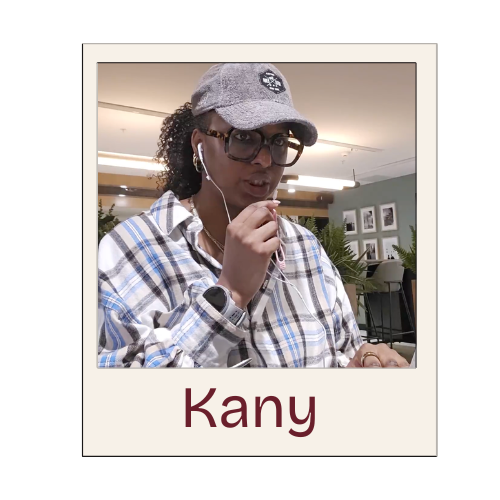
Kany, founder of Eat The Iceberg

Why I created Eat The Iceberg

I have worked in marketing for more than ten years.

Over the years, I have worked with dozens of companies, clients and very different teams.

I also teach growth marketing to business owners and to my own marketing community.

So I’ve spent a huge amount of time talking with other professionals about what they do, what they try, and the problems they run into.

And since I started working independently, one thing in particular has bugged me.

We learn an enormous amount from one project to the next, yet we are surprisingly bad at building on all that knowledge.

More than once, I’ve clearly remembered solving a similar problem years earlier… without being able to quickly find the details that would have let me reproduce it.

And when I’m tackling a subject I know less well, I don’t necessarily want yet another article about “10 best practices”.

I would rather ask:

Who has dealt with this before? What did you try? What actually happened?

That’s where Eat The Iceberg began.

First as a way to preserve our own experiments more effectively.

Then with a fairly obvious idea behind it:

If this memory can help us individually, imagine what it could become collectively.

Back to basics: test, learn, share.

At its core, Eat The Iceberg rests on three things the marketing and growth marketing world knows very well.

Test

An idea remains a hypothesis until it meets reality and is tested against real data.

It doesn’t matter how many people swear a tactic works.

Until you test it against your market, your audience, your budget, and your constraints, you don’t know what it will do for you.

Learn

An experiment produces a learning whether or not it meets its objective.

That’s why Eat The Iceberg uses Success and Learning.

An inconclusive test doesn’t look particularly exciting in a LinkedIn case study.

But it can be extremely useful to the next person considering exactly the same thing.

It also helps when you want to run that experiment again with similar parameters, saving you time — sometimes a lot of it. Time is money, after all.

Share

What you document today may help you later.

And if you choose to share it, your experience can also help someone else avoid starting from scratch.

Your experiments build your memory. Together, they build ours.

Marketing is not a solo profession.

Eat The Iceberg naturally begins with the marketing community.

But let’s be serious for a second: a company’s growth obviously doesn’t depend only on people with “Growth Marketing” in their LinkedIn title.

An acquisition strategy may depend on an excellent SEO specialist.

A paid campaign may need a content creator.

An activation experiment may be blocked without a Product Manager.

An analysis may require a Data Analyst or Data Scientist.

A conversion problem may call for a CRO specialist.

A retention strategy may combine CRM, product, content and Customer Success.

You don’t need “Growth” in your job title to contribute to your company’s growth.

Growth, SEO, CRM, acquisition, content, product, data, CRO, analytics, brand, lifecycle…

All these areas of expertise belong here and are an integral part of the broader growth marketing community.

The goal definitely isn’t to turn everyone into an expert at everything. Quite the opposite.

If everyone brings depth where they are genuinely strong, collectively we become a lot less bad at everything else.

How does Eat The Iceberg work?

You don’t need to read a 47-page manual to get started.

  1. Tell us what you genuinely know

    Complete your profile with your role, professional environment and areas of expertise.

    Not the ones you might like to master one day. The ones where you can genuinely contribute and where you are genuinely good.

  2. Discover what others have tested

    Explore the library of marketing experiments.

    See what was tested, in which context, how the experiment was run and what it actually produced.

    Save what interests you so you can find it later and perhaps test it yourself or with your team.

  3. Keep a record of your own experiments

    Document the tests you take part in, their context, how they unfolded, their results and what you learned.

    There is no need to turn every experiment into a perfectly packaged success story.

    The point is to keep it useful, for you and for the rest of the community.

  4. Contribute when you have something to add

    Publish an experiment. Ask a question. Answer someone on a topic you know. Comment on a real-world experience. Share a nuance that could change how a result is interpreted.

You don’t need to know everything. Bring what you genuinely know.

Fair enough. But why would I share my work?

Good question!

Sharing your work isn’t an obvious choice, especially when that expertise is part of what you’re paid for.

So let’s talk about the real concerns we have as marketers.

“Won’t people steal my ideas?”

Yes, sharing an experiment makes it more visible.

But ideas already circulate today.

We discover tactics on LinkedIn, in podcasts, newsletters, conferences, private communities or simply by watching what other companies are doing.

Some people will even sell you those same ideas at a premium!

Eat The Iceberg is not going to invent inspiration between professionals.

The difference is that what you document remains connected to you.

Your profile makes it possible to find your contributions and understand the subjects you have actually worked on.

Members who regularly make useful contributions may also be featured more prominently in the community.

So you’re not just sharing an idea.

You’re also showing that you’re the person who tested it.

“What about my client’s or company’s data?”

We don’t need to know the company’s name.

To understand an experiment, what matters is its context: the sector, market, team size, available resources, a budget range, the audience and the constraints involved.

We can learn a great deal from an experiment without knowing which company is behind it.

Client names, personal data and confidential information are not meant to be published.

And before it becomes public, every experiment goes through human moderation.

If something clearly shouldn’t be there, we send the contribution back for correction, or it doesn’t get published.

We share what helps people understand. Not what should remain confidential.

“What if my experiment did not work?”

Then it may have even more to teach us.

Eat The Iceberg is not a collection of campaigns claiming +284% with three fire emojis at the end.

No, no, no!

A hypothesis can be invalidated. An audience may not respond. A channel may be far too expensive. A mechanism may be excellent on paper and far too complex to execute in real life.

That’s exactly why we use Success and Learning.

We want to know what works — but just as importantly, what doesn’t, and why.

That can save a tremendous amount of time and give the community valuable information.

That doesn’t mean the experiment won’t work for someone else.

It provides a signal and useful context to consider before getting started.

“I’m not expert enough to contribute.”

No one masters their entire iceberg. That’s rather the point.

You don’t need an opinion on every marketing subject.

You don’t even need to be “the authority” in your field.

What matters is being able to say honestly:

“Here is what I tested. Here is how. Here is what I learned.”

“Why give away something I charge for?”

Sharing your experience doesn’t mean publishing all your know-how.

You can explain your reasoning, document an experiment and share its main learnings without putting your entire method, internal files or competitive advantage online.

Showing that you know how to do something doesn’t require you to explain absolutely everything you know.

You can also export that knowledge and share it with a client so they can see the depth of your thinking and how you work.

By contributing to the platform, you’re also building a body of work that demonstrates your expertise.

Share what others can learn from. Keep private what should remain private.

Your work can become the strongest proof of your expertise.

On a CV or LinkedIn, you can write:

Paid Acquisition · 5 years of experience

That’s useful, of course.

But someone else can write exactly the same thing.

On Eat The Iceberg, your profile can also show the experiments you have actually contributed to: their context, the hypothesis, how they were carried out, the results and what you learned.

Suddenly, your expertise becomes much more concrete.

You’re not just telling people about your experience — you’re showing your know-how, in detail.

Don’t just say what you can do. Show it!

Every member has a public profile where they can highlight their expertise and contributions.

Whether you’re looking for a freelance project, a permanent role, a collaboration, or simply to be recognised for a particular subject, your profile gradually becomes a portfolio of your real marketing work.

Contributing helps the community.

It also lets you build something for yourself and establish your expertise in your field.

Marketing is an iceberg.

The more experience you gain in this field, the more something interesting happens.

You learn an enormous amount.

At the same time, you realise just how much still lies beneath the surface.

SEO, CRM, acquisition, product, content, data, CRO, brand, analytics, lifecycle…

Even the best marketer will never master all of it perfectly.

And that’s a good thing.

We don’t all have the same expertise. And our companies aren’t the same either.

Our budgets, markets, constraints and experiences are different.

That’s precisely what makes sharing worthwhile.

No one can eat the iceberg alone.

But if everyone brings the part they genuinely know, we can start nibbling away at it together.

One experiment at a time.